IDGC Stories: Happiness Became Her Reality After Years Of Pain
Stories
IDGC Stories: Happiness Became Her Reality After Years of Pain
Published Date:26 Oct, 2025
Brief
This story was submitted by Yemen Women Union as part of the Regional Action Forum's IDGC 2025 Campaign
In a forgotten corner of a displacement camp in Hajjah city, Saedah—a 19-year-old girl— whose name means “happiness” carried the weight of a life she never chose. Her childhood was a series of heartbreaks, beginning with the war that forced her to flee her village in Al-Qanawis, Al-Hodeidah Governorate, while still in second grade. She left behind her school, her home, and her little dreams, only to face a harsh reality in a camp where she knew no one, surrounded by a family crushed by poverty and disability—a father unable to work and a mother forced to beg from morning till night.
But the pain didn’t end with displacement. At just 13 years old, Saedah was forcibly married to a man twenty years her senior—a decision made without her consent or choice. She moved to Abs, where new chapters of suffering began. At first, life seemed bearable, but it quickly turned into torment. Her unemployed husband was verbally abusive, financially manipulative, and physically violent when she refused to give him money. He incited his mother against her and eventually forced her to beg in the streets. When she resisted, he beat her severely, leading to the loss of her unborn child. He confiscated her phone to cut off contact with her family and locked her in a room to pressure her into begging.
In a rare moment of courage, Saedah seized the opportunity when he was away and escaped to a nearby village. From there, she reached her mother in Hajjah. Three years passed without a word or support from her husband, but they marked the beginning of her transformation.
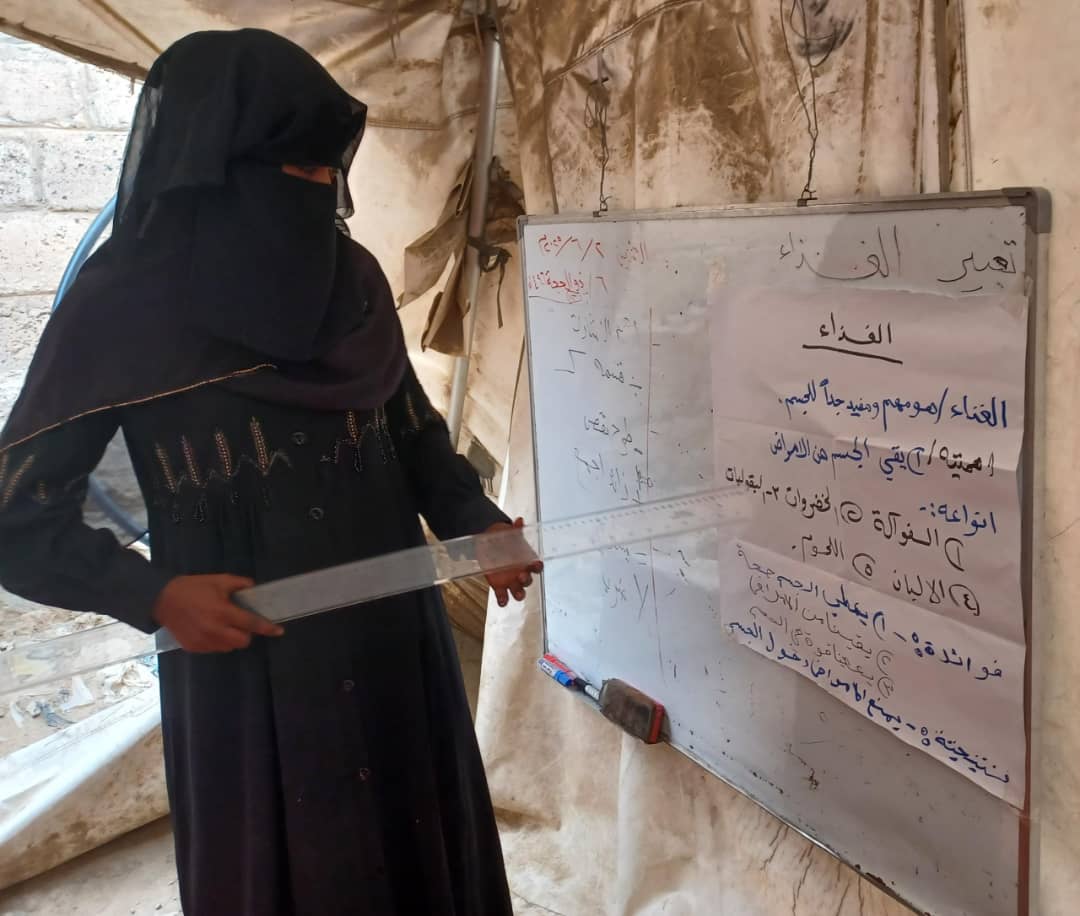
One day, a field worker from the "Rural Girl Program"—run by the Yemen Women Union and funded by the UNFPA—visited her area. That visit was a beam of light piercing the darkness of Saedah’s life. They listened to her, embraced her pain, and enrolled her in Reflect Methodology classes. She received not only education but also psychological support that helped heal her spirit, medical care to treat the effects of abuse, and legal assistance that empowered her to file a lawsuit against her husband and reclaim her dignity.
Saedah learned to read, write, and do basic math. She also acquired skills in crafting accessories. Gradually, she transformed from a broken girl into an active, social young woman who participated in every activity and inspired those around her.
"I truly became Saida—happy. I feel at peace. I got what I always wanted: freedom and tranquility. Now I can read, write, and calculate." said Saedah, with a hopeful smile.
Saedah’s story is not just one of survival—it’s a living testament that empowerment begins with being heard, and that genuine support can rebuild a human life from the ground up.
This story was submitted by Yemen Women Union as part of the Regional Action Forum's IDGC 2025 Campaign