IDGC Stories: Empowerment Doesn’t Just Heal Wounds – It Prevents Them From Happening Again
Stories
IDGC Stories: Empowerment doesn’t just heal wounds – it prevents them from happening again
Published Date:26 Oct, 2025
Brief
This story was submitted by Yemen Women Union as part of the Regional Action Forum's IDGC 2025 Campaign.
In Hajjah Governorate's Midi District, Aliyah, a nineteen-year-old girl, once dreamed like any child of a bright future. She was a top student, full of life, sketching her hopes in school notebooks and believing that education was her path to a better world. But war stole her chance. Her family lost their home and source of income, forcing them to flee to a camp in Al-Hudaydah Governorate, where the chapters of suffering began.
Amid displacement and extreme poverty, childhood was no longer a priority. At just fifteen, Aliyah became a victim of early marriage. She had no choice—her family, drowning in hardship, saw it as a solution.
“I got married and left school,” Aliyah says. “I couldn’t object—my family was desperate. I was the price.”
That marriage marked the beginning of her collapse. She endured physical and emotional abuse, was denied education, and her health deteriorated severely. Her dreams shattered, and her sense of despair grew day by day.
When her condition reached the brink of breakdown, she was transferred to the health center in Al-Zuhdiyah, where a turning point began. She was referred to the “Empowering Rural Girls” program run by the Yemen Women Union and funded by UNFPA.
The team welcomed her with compassion and care, and her recovery journey began. She underwent intensive psychological support sessions that helped her overcome depression, followed by specialized medical care to treat the effects of early marriage, pregnancy, and childbirth.
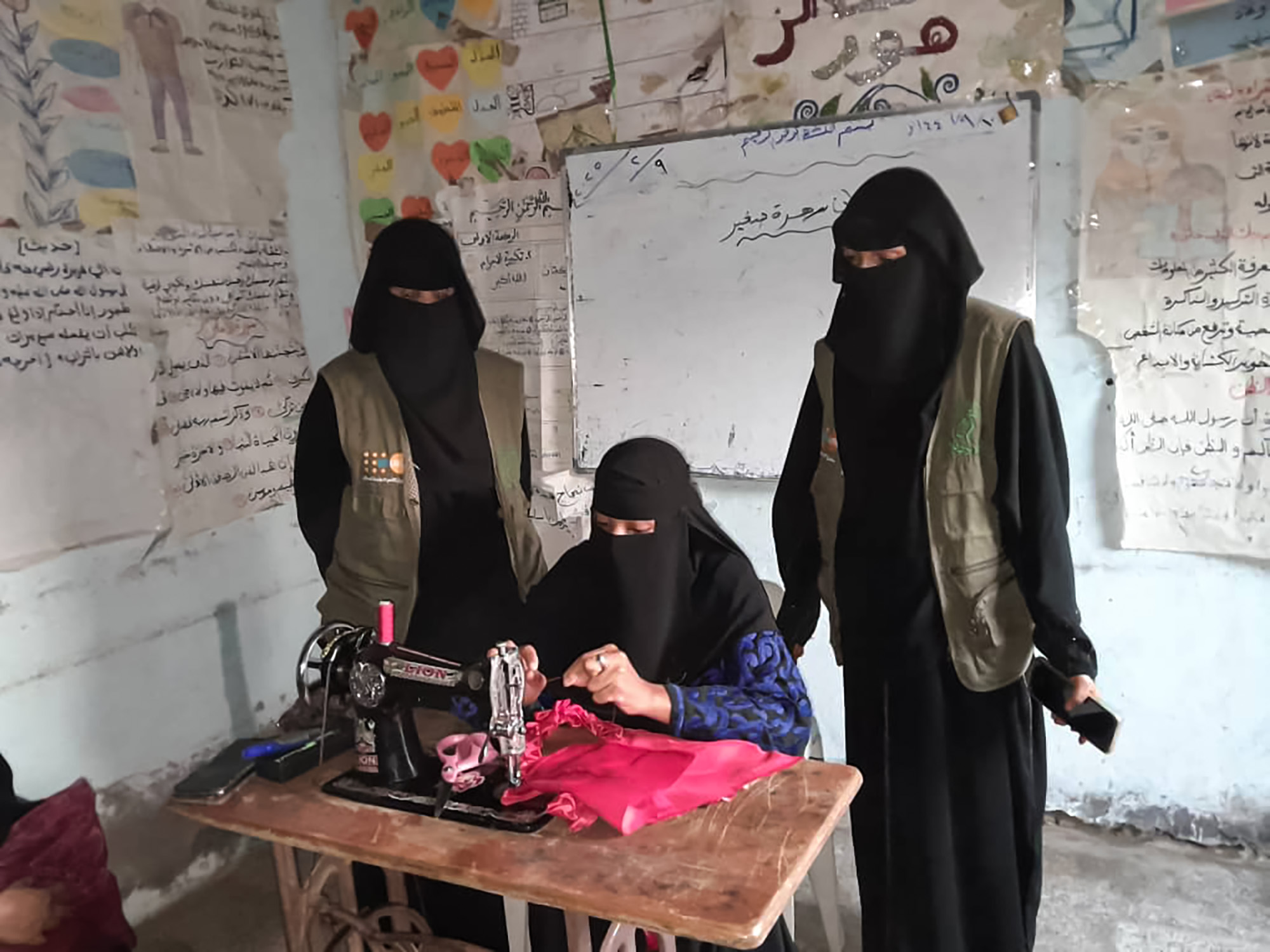
But the support didn’t stop at treatment. The team noticed her passion for learning and enrolled her in “Reflect Methodology” classes, where she regained her self-confidence and began forming new social connections. Over time, her talent in sewing emerged, and she was economically empowered and trained in the craft she loved.
Today, Aliyah is no longer the broken girl she once was. She owns a successful tailoring business, designing and sewing with precision, and has loyal customers who trust her taste and skill. She also mastered incense-making, generating additional income that helped her family build a dignified shelter.
Aliyah is now separated from her husband and lives with her two children, whom she cares for and ensures they will receive an education—giving them what she was once denied. She not only meets their needs but also continues to support her extended family, contributing to their basic expenses and wellbeing.
“I went through a dark phase,” she says proudly, “but I came out stronger. The support I received gave me back my life and made me capable of protecting myself and my family. I won’t let my sisters go through what I did.”
Thanks to psychological, medical, and educational empowerment, Aliyah became a symbol of survival and transformation. She didn’t just save herself—she became a shield for her sisters against early marriage and a pillar of support for her children and family, carrying the banner of hope in the face of adversity.
This story was submitted by Yemen Women Union as part of the Regional Action Forum's IDGC 2025 Campaign.