IDGC Stories: Empowering Women And Girls Through Awareness, Support, And Community Leadership
قصص
IDGC Stories: Empowering Women and Girls Through Awareness, Support, and Community Leadership
Published Date:31 Oct, 2025
Brief
This story was submitted by Basmeh and Zeitooneh as part of the Regional Action Forum's IDGC 2025 Campaign
In the Palestinian camps of Beirut, Mount Lebanon, Shatila, and Bourj el-Barajneh, women and girls face daily challenges that threaten their safety, dignity, and futures. Through this project, Basmeh & Zeitooneh is helping them turn those challenges into opportunities for change. The program works to prevent and respond to gender-based violence (GBV) and early marriage, while creating spaces where women and girls can learn, lead, and support each other.
What makes this initiative truly unique is that it is completely community-led. Basmeh & Zeitooneh partners closely with women mentors from within the camps; women who understand these struggles firsthand because they have lived them. Many are survivors of early marriage or GBV themselves, and their courage and experience have made them trusted figures in their neighbourhoods. These mentors guide younger girls, raise awareness about protection risks, and help their communities build protective networks that last beyond the life of the project.
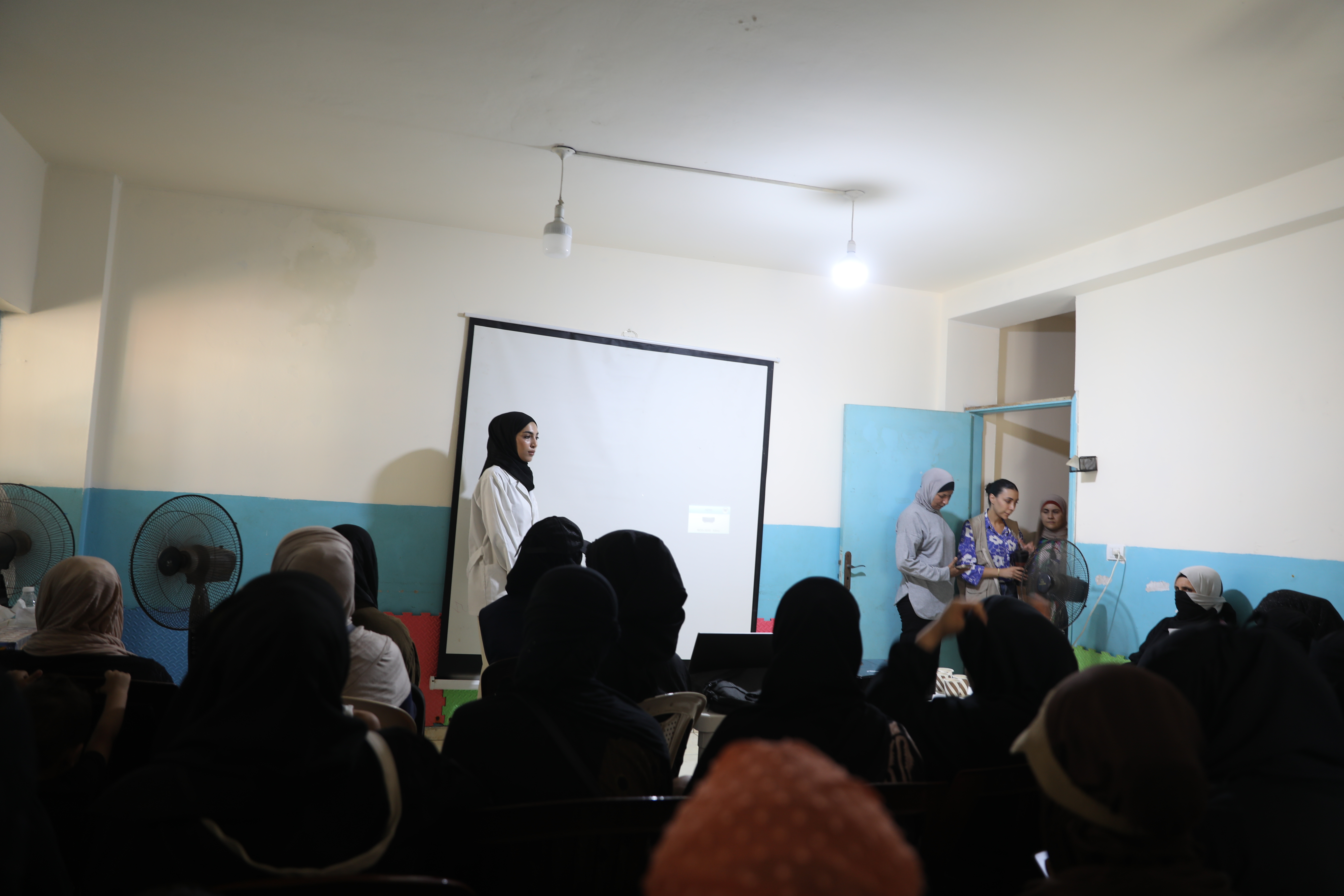
All activities take place within Women and Girls Safe Spaces (WGSS), welcoming spaces where women can meet safely, learn new skills, and share their stories without fear or judgment. These spaces are more than just physical shelters; they are community hubs for solidarity and growth. Women decide how they want to use the space, suggest activities, and regularly share feedback to make sure the support offered actually meets their needs.
“The sessions have helped us so much. They reminded us of things we had forgotten and taught us new, useful information. Even my kids learned something; they started asking questions and becoming more aware,”one participant shared with a smile. “Now we look forward to these sessions every week. They’ve become part of our routine.”
For women and girls facing immediate risks, the program offers individualized case management and specialized support services. Trained caseworkers provide confidential, survivor centred assistance that prioritizes safety, dignity, and choice. They help connect survivors to psychosocial, legal, and health services, ensuring that no woman faces violence alone.
“I didn’t know much about health before, but now I feel informed. I’ve also made friends through the sessions. Even my relationship with my husband has changed; I’ve learned how to express myself calmly, without arguing,” another participant added.
This work reflects international protection and safeguarding standards, including the Core Humanitarian Standard (CHS), Accountability to Affected Populations (AAP) principles, and the IASC GBV Guidelines, but brings them to life through community ownership. The project is a model for localization in practice: women leading, mentoring, and protecting one another in their own communities, supported by technical expertise and long-term commitment.
By combining the strength of community networks with professional case management and safe spaces, this project is helping women reclaim power over their lives and shape safer futures for the next generation. It shows that when women lead,especially those who have endured hardship,the entire community becomes stronger, more aware, and more compassionate.
This story was submitted by Basmeh and Zeitooneh as part of the Regional Action Forum's IDGC 2025 Campaign